
 Skip to content
 Cranial nerve disorders are conditions that affect the nerves responsible for sensation and movement in the face, head, and neck. These disorders can cause a wide range of symptoms, including facial nerve pain, numbness, muscle weakness, and severe pain in the face. Some conditions, such as trigeminal neuralgia, are known for causing sudden, electric-shock-like facial pain that can significantly impact daily life. Early diagnosis and targeted treatment are essential to prevent progression and improve quality of life.
Has this article been insightful? Share it!
Cranial nerve disorders, also known as cranial neuropathies, occur when one or more of the twelve cranial nerves are damaged or malfunction. These nerves emerge directly from the brain and control essential sensory and motor functions, including facial sensation, facial expression, vision, hearing, balance, swallowing, and speech.
When cranial nerves are affected, patients may experience neuropathic facial pain, weakness, or altered sensation. A well-known example is trigeminal neuralgia, a condition that causes severe, recurring pain in the face due to dysfunction of the trigeminal nerve. Other disorders may lead to facial nerve pain, muscle paralysis, or difficulty with basic functions such as chewing or blinking.
Early recognition of cranial nerve disorder symptoms allows for prompt treatment and better outcomes.
For related nerve issues affecting the limbs, such as Carpal tunnel syndrome, visit the Peripheral Nerve Disorders page.
A tumour pressing against the olfactory nerve
Sensory cranial nerves are responsible for transmitting sensations such as touch, pain, temperature, smell, hearing, and vision. The trigeminal nerve plays a major role in facial sensation, supplying the forehead, cheeks, jaw, and oral cavity.
Disorders affecting sensory nerves can result in facial pain syndrome, tingling, burning sensations, or numbness. In trigeminal neuralgia, even mild stimulation, such as washing the face or brushing teeth, can trigger intense pain in the face.
Motor cranial nerves control muscle movement in the face, eyes, tongue, and throat. Damage to these nerves can cause facial weakness, drooping, difficulty speaking, or problems with swallowing.
Facial nerve dysfunction, for example, can lead to muscle paralysis or abnormal facial movements, sometimes accompanied by chronic facial nerve pain.
Certain cranial nerves are responsible for special sensory functions such as smell, vision, balance, taste, and hearing. Disorders affecting these nerves may cause dizziness, hearing loss, visual disturbances, or loss of taste and smell. In some cases, nerve compression by blood vessels or tumours may also contribute to pain and neurological symptoms.
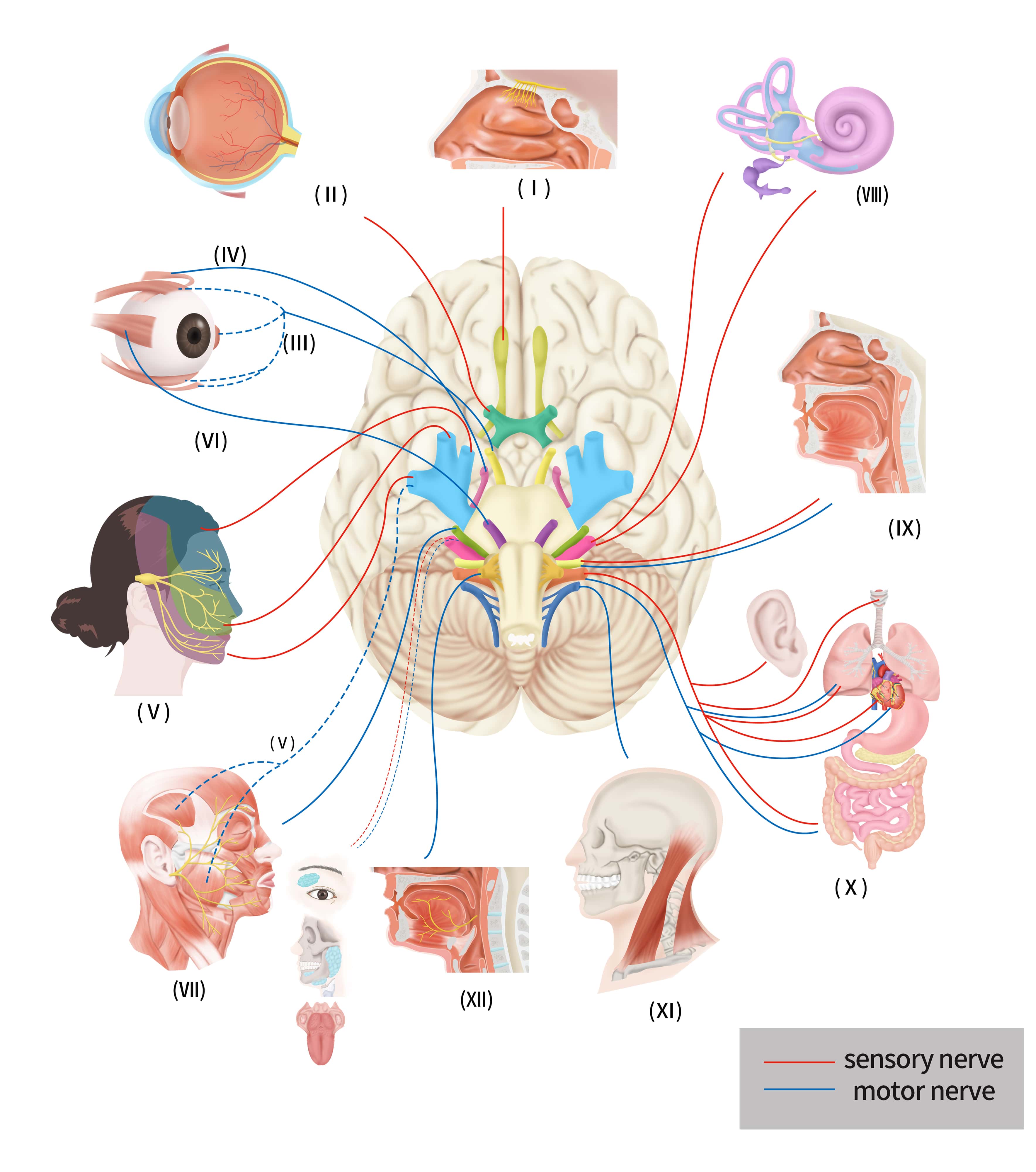
Each cranial nerve has a specific role, and dysfunction can lead to distinct symptoms. Among them, the trigeminal nerve and facial nerve are most commonly associated with facial pain.
The trigeminal nerve is the largest cranial nerve and is responsible for sensation in the face and motor functions such as chewing. Dysfunction of this nerve can result in trigeminal neuralgia, a condition characterised by sudden, severe pain in the jaw, forehead, cheeks, or around the eyes. Trigeminal neuralgia treatment may include medication or surgical intervention, depending on severity.
The facial nerve controls facial expressions, tear and saliva production, and some taste sensations. Disorders of the facial nerve can cause facial weakness, paralysis, or persistent facial nerve pain, affecting both function and appearance.
Cranial nerve disorders are classified based on the nerve involved. Some conditions mainly affect movement, while others primarily cause sensory disturbances or pain.
Trigeminal neuralgia is a chronic neuropathic pain condition affecting the trigeminal nerve. It is characterised by sudden, severe facial pain that may feel like an electric shock. Pain episodes are often triggered by routine activities such as eating, speaking, shaving, or brushing teeth.
Common trigeminal neuralgia symptoms include sharp, stabbing pain on one side of the face, recurring pain attacks, and increasing frequency or intensity over time. Early diagnosis and appropriate trigeminal neuralgia treatment—such as medication or surgical decompression—can significantly improve quality of life.
Other cranial nerve disorders include Bell’s palsy, cranial nerve palsies, hemifacial spasm, and acoustic tumours, each presenting with distinct neurological symptoms.
Cranial nerve disorders may develop due to trauma, infections, inflammation, tumours, or underlying medical conditions such as diabetes or hypertension. In some cases, congenital abnormalities may also be responsible.
In trigeminal neuralgia, a common cause is vascular compression, where a blood vessel presses against the trigeminal nerve near its origin in the brainstem. This compression disrupts normal nerve signalling and leads to severe facial pain episodes.
Symptoms vary depending on the nerve involved but commonly include:
Persistent or worsening facial nerve pain should be evaluated promptly by a specialist.
Medical evaluation is recommended if you experience persistent facial pain, sudden onset of severe pain in the face, facial weakness, or sensory changes. Early assessment is particularly important for suspected trigeminal neuralgia, as delayed treatment may worsen symptoms.
For expert evaluation and care, consult a neurosurgeon in Singapore.
Diagnosis typically begins with a detailed medical history and neurological examination. Imaging studies such as MRI scans are often used to identify nerve compression, inflammation, or tumours. Additional tests, including nerve conduction studies or audiometry, may be performed depending on symptoms.
Accurate diagnosis helps guide effective trigeminal neuralgia treatment and other targeted therapies.
Treatment depends on the type and severity of the disorder.
Medications such as anticonvulsants (e.g., carbamazepine or phenytoin) are commonly used for trigeminal neuralgia to control nerve pain. Steroids may be prescribed for inflammatory conditions affecting the facial nerve.
For patients who do not respond to medication, surgical options such as microvascular decompression or gamma knife surgery may be recommended. These procedures aim to relieve pressure on the affected nerve and reduce pain episodes.
Cranial nerve disorders can lead to serious conditions such as dysphagia, severe pain, and other symptoms. As early diagnosis facilitates early treatment, if you experience symptoms of a cranial nerve disorder, do not hesitate to reach out to us. Our team will help you properly manage these symptoms or provide tailored treatment.
Cranial nerve disorders can cause debilitating facial pain, weakness, and sensory disturbances that may worsen over time if left untreated. Recognising trigeminal neuralgia symptoms, facial nerve pain, or persistent pain in the face early allows for accurate diagnosis and effective treatment planning.
If you are experiencing ongoing or severe facial pain, numbness, or neurological symptoms, expert evaluation is essential. Talk to us to discuss your symptoms, receive a comprehensive assessment, and explore appropriate treatment options tailored to your condition.
Talk to UsContact Us For More Information
We provide quality specialised care for neuro and spine conditions.
For enquiries, leave a message and our friendly team will get in touch with you.
Monday – Friday: 9:00AM – 5:00PM
Saturday: 9:00AM – 12:30PM
Sunday & Public Holiday: Closed
We provide quality specialised care for neuro and spine conditions.
For enquiries, leave a message and our friendly team will get in touch with you.
Monday – Friday: 9:00AM – 5:00PM
Saturday: 9:00AM – 12:30PM
Sunday & Public Holiday: Closed
We provide quality specialised care for neuro and spine conditions.
For enquiries, leave a message and our friendly team will get in
touch with you.
Monday – Friday: 9AM – 1PM | 2PM – 5PM
Weekends & Public Holidays: CLOSED
Member of Beyond Medical Group
© 2023 All Rights Reserved | Advanced Brain & Spine Surgical Centre | Terms & Conditions
 Optimized by Seraphinite Accelerator